
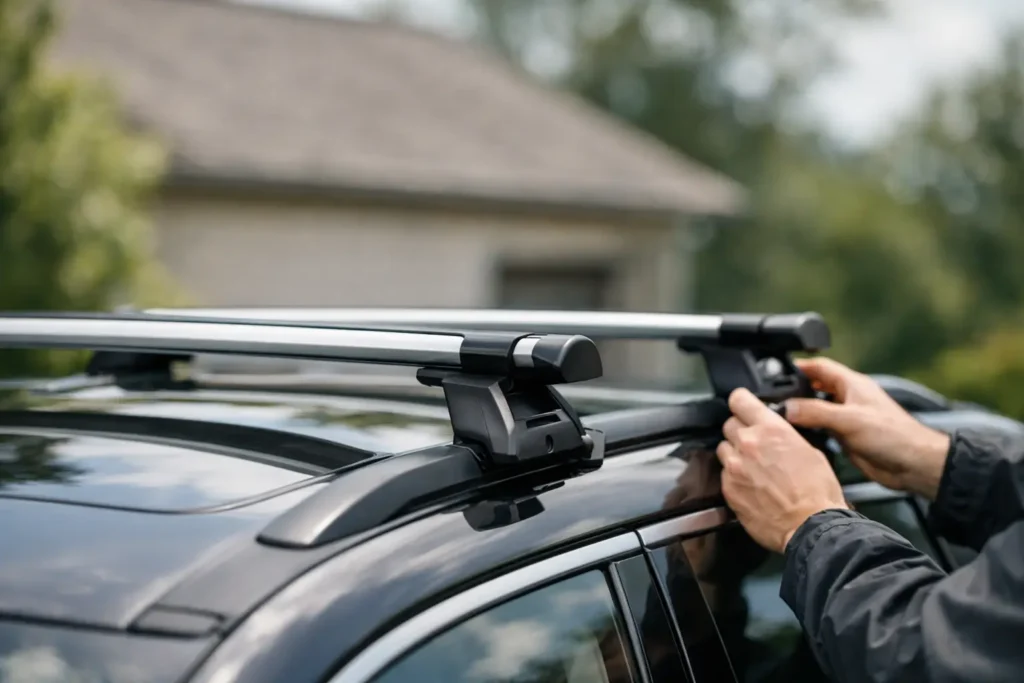
You usually find out you need roof bars at the worst possible moment – when the trunk is full, the back seat is packed, and the trip is only a day or two away. That is why knowing how to choose roof bars matters before you book a break, plan a camping trip, or try to squeeze one more suitcase into the car.
The good news is that choosing the right bars is not as complicated as it first looks. The wrong news is that not all roof bars fit all cars, and guessing can get expensive fast. A setup that works perfectly on one vehicle may be completely wrong for another, even if the cars look similar.
How to choose roof bars for your vehicle
The first thing to check is how your roof is designed. This is where most people either get it right quickly or end up ordering something that never had a chance of fitting.
Some cars have raised roof rails running front to back, with a visible gap underneath. These are usually the most straightforward because many bar systems are designed to clamp around them. Other cars have flush rails, where the rail sits tight against the roof. These need a different fitting method. Some vehicles have fixed mounting points hidden under small covers, and others have no rails at all and need a door-frame fitting kit.
That is why the car make and model alone is not always enough. You also need the year and, in many cases, the exact roof type. A 2019 version of a model may need different bars from the 2022 version. Even trim level can sometimes make a difference.
If you are unsure, stop there rather than taking a chance. Roof bars are a safety item, not something to buy on a rough estimate.
Start with fit, not price
It is tempting to compare options by price first, especially if you only need bars for one trip. But fit comes before everything else. Cheap bars that do not sit correctly, clamp badly, or sit at the wrong width are not a bargain.
A proper roof bar system is usually made up of three parts: the bars themselves, the feet or supports, and the fitting kit designed for your specific vehicle. That is why one universal-looking set may still need vehicle-specific parts to work safely.
This is also where renting can make a lot of sense. If you only need extra carrying space for a vacation or occasional travel, buying the full setup can cost far more than expected. Then you still need to store it, fit it, and make sure you have chosen correctly. For plenty of drivers, especially first-time users, it is easier to have the right equipment matched and fitted professionally.
Aluminum or steel roof bars?
Once fit is sorted, the next question is usually material. Most drivers will be choosing between steel and aluminum bars.
Steel bars are often the more budget-friendly option. They are strong and do the job well, especially for occasional use. The trade-off is that they are heavier, usually noisier at speed, and not always as refined in day-to-day use.
Aluminum bars tend to be lighter, quieter, and easier to handle. They also often have a more aerodynamic shape, which can help reduce wind noise. They usually cost more, but many people prefer them for longer journeys or repeated use.
There is no single right answer here. If your priority is keeping costs down for a short trip, steel may be perfectly sensible. If you want a quieter, neater setup for regular travel, aluminum is often worth it.
Think about what you are actually carrying
A lot of people search how to choose roof bars when what they really mean is how to choose the right setup for a roof box, bikes, or extra luggage. The bars are only part of the picture.
If you are planning to carry a roof box, check the box compatibility with the bar width and shape. Some roof boxes attach easily to wider aerodynamic bars, while others work best with traditional square bars. Bike carriers and other accessories can have similar requirements.
You also need to think about load rating. Every vehicle has a maximum roof load, and that limit includes the bars and the accessory as well as your luggage. So if your car roof is rated for 165 pounds, that does not mean 165 pounds of suitcases inside a roof box. You have to subtract the weight of the bars and the box first.
That is one of the most common mistakes people make. They buy strong bars and assume that means they can carry anything. In reality, the car’s roof limit is the number that matters most.
Width matters more than many drivers expect
Bar width sounds like a minor detail until accessories do not fit properly. Bars that are too narrow can limit what you can mount. Bars that stick out too far can be awkward, noisy, and easier to knock into when loading.
The best width is usually the one specified for your vehicle and intended use. If you are only carrying a roof box, you may not need extra overhang. If you are carrying multiple items, like bikes and a box, the bar length becomes more important.
Again, this is where advice based on your exact vehicle is more useful than general online guesswork.
Noise, fuel use, and everyday practicality
Most people do not think about wind noise until they hear it on the highway. Roof bars can add a whistle or hum, especially if they are square steel bars or if they are left on the car when not needed.
Aerodynamic bars usually help keep noise down, but even then, some sound is normal. Load placement, speed, and the vehicle itself all make a difference. If your trip includes long highway miles, quieter bars can make the drive noticeably more comfortable.
Fuel economy is another factor, although it is best to be realistic. Any load-carrying system on the roof creates drag. Roof bars alone may have a modest effect, while bars with a roof box will usually have a bigger impact. If you only need the setup for a trip, it often makes sense to remove it afterward rather than leave it fitted year-round.
This is one more reason many occasional users prefer rental. You get the extra space when you need it, then the equipment comes off and does not clutter your garage or sit on the car for months.
Safety and fitting are not the place to wing it
Roof bars should sit securely, evenly, and at the correct spacing points for your vehicle. They also need the right torque on the fittings. Too loose is obviously risky, but too tight can be a problem as well if it damages rails, seals, or mounting points.
A proper fit is about more than getting the bars attached. You also need to position them correctly for the accessory being used, especially with roof boxes. If the box sits too far forward, it can interfere with the trunk opening. Too far back, and weight distribution may not be ideal.
For first-time users, professional fitting removes a lot of uncertainty. You know the bars match the car, you know they have been installed correctly, and you do not have to spend half an evening second-guessing the instructions.
That is a big part of why customers choose a specialist service rather than trying to piece everything together themselves. With West Midlands Roof Box Hire, for example, the fitting is part of the service, which saves time and helps avoid expensive mistakes.
When buying makes sense and when renting is smarter
If you travel frequently, own the same car long term, and know you will use roof bars several times a year, buying can be worthwhile. You will have them ready whenever needed, and over time the cost may balance out.
But if this is for a single family vacation, a couple of camping weekends, or one busy travel season, renting is often the more practical option. You avoid the upfront cost, you do not need to find space to store the bars, and you are less likely to end up with the wrong fit.
That matters even more if you change cars regularly. Roof bars are not always transferable, so buying a full setup for one vehicle can become poor value sooner than expected.
A simple way to make the right choice
If you want the shortest route to the right answer, focus on five things: your exact vehicle and roof type, what you want to carry, the roof load limit, the kind of driving you are doing, and whether this is a one-off need or something you will use often.
Get those right, and the choice becomes much clearer. Get them wrong, and even a high-quality set of bars may be the wrong solution.
A little care at the start saves a lot of hassle later. The best roof bars are not the most expensive ones or the most popular ones – they are the ones that fit your car properly, carry your load safely, and make your trip easier from the moment you pull away.