
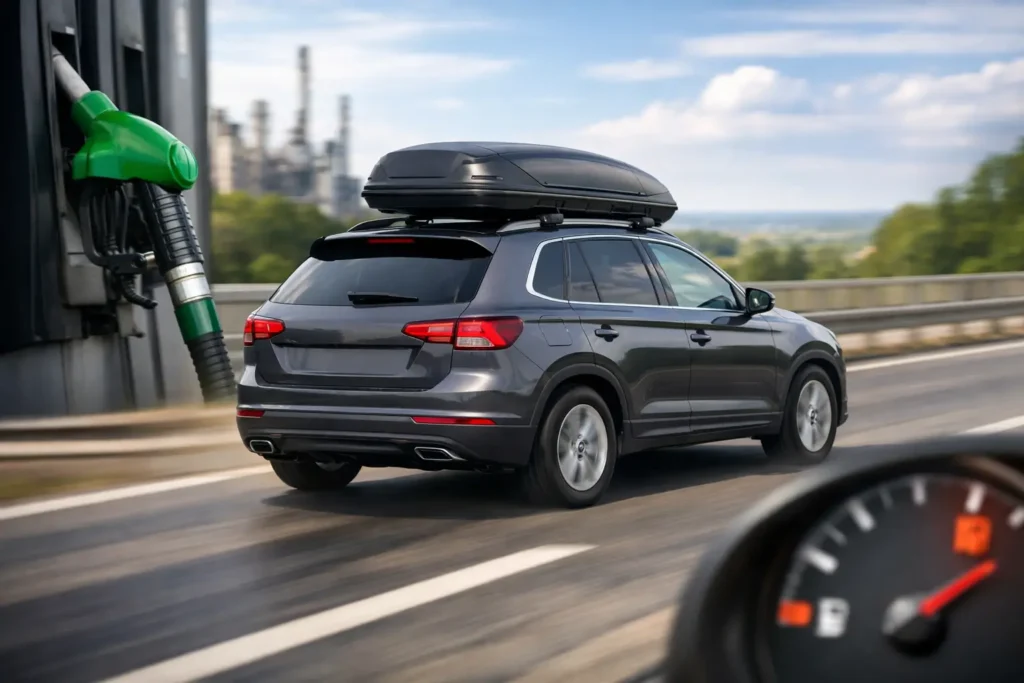
You usually notice it on the highway, not in town. The car feels a little less smooth, there is a bit more wind noise overhead, and somewhere during the trip you start wondering: do roof boxes affect fuel economy enough to matter?
The honest answer is yes. A roof box can increase fuel use because it adds aerodynamic drag and some extra weight. But the size of that effect depends on how you drive, what kind of box you use, how well it is fitted, and whether you really need it for that trip. For most families heading off on vacation, the trade-off is often worth it because the extra space makes the journey far easier. The key is understanding where the fuel penalty comes from and how to keep it as low as possible.
Do roof boxes affect fuel economy in real driving?
Yes, they do, but not all trips are affected in the same way. At lower speeds, especially around town, the difference may be fairly modest. Once you get onto faster roads, the impact becomes more noticeable because the box changes the way air moves over the vehicle.
That matters because fuel economy is heavily influenced by drag. A car is designed to cut through the air with as little resistance as possible. Put a roof box on top and you interrupt that airflow. The engine then has to work harder, especially at 60 to 75 mph, and that means using more fuel.
Weight plays a part too, though usually less than people expect. In many cases, the aerodynamic effect is the bigger factor than the actual weight of the box and luggage. A lightly packed but bulky roof box can still hurt fuel economy more than a heavier load stored inside the car.
Why speed makes the biggest difference
If you only use a roof box for a short local drive, you may barely notice any change at the pump. Long highway runs are different. The faster you travel, the more drag matters, and the more obvious the fuel penalty becomes.
That is why two people can have very different experiences with the same setup. One driver may use the box for a quiet weekend break with mostly slower roads and report only a small drop in mpg. Another may drive several hundred miles on major highways at higher speeds and see a far larger difference.
For most drivers, speed is the single biggest factor they can actually control. Even reducing cruising speed slightly can help offset some of the extra fuel use. It may not sound dramatic, but over a full round trip it can make a noticeable difference.
The box shape matters more than many people think
A low-profile, well-designed roof box generally creates less drag than a tall, bulky one. That does not mean bigger boxes are a bad idea. Sometimes a family simply needs the extra capacity. But if you are choosing between sizes, it is worth thinking about what you truly need rather than automatically going for the largest option.
A streamlined design can help reduce the effect on fuel economy, wind noise, and overall driving feel. Good-quality boxes are usually better in this area than cheaper, less refined designs.
Poor fitting can make things worse
A properly fitted roof box should sit securely and in the correct position on the roof bars. If it is mounted too far forward, too far back, or not aligned well, that can affect both airflow and safety.
This is one reason first-time users often feel more confident with professional fitting. It removes the guesswork and helps make sure the setup is suitable for the car, the bars, and the load.
How much does a roof box lower mpg?
There is no single figure that applies to every vehicle. A small hatchback, a large SUV, and a wagon will all respond differently. Driving conditions, weather, load, tire pressure, and speed all come into play as well.
In practical terms, many drivers notice some drop in fuel economy rather than a dramatic collapse. It is often enough to be noticeable on a longer trip, but not always enough to outweigh the convenience of having the cabin and trunk properly organized. For a family car packed for vacation, that extra breathing room can be worth far more than the added fuel cost.
The bigger issue is usually not whether there is an effect, but whether the setup is sensible. A roof box that is the right size, loaded properly, and removed when not needed is a very different proposition from leaving a large empty box on the car for weeks at a time.
When the trade-off is worth it
For many people, a roof box solves a bigger problem than fuel cost. It frees up trunk space, keeps the back seat less cramped, and can make long drives more comfortable for adults, children, and pets. That matters on a real trip.
If the alternative is stuffing luggage into the passenger area, blocking rear visibility, or taking two vehicles instead of one, a roof box can actually be the more practical choice. Even with some extra fuel use, it may still save money overall and make the journey much easier.
That is especially true for occasional use. Buying a roof box, storing it, and keeping it secure all year is not always good value if you only need it for a couple of trips. Renting one for the period you actually need can be the simpler option.
How to reduce the fuel economy impact
If you are using a roof box, a few practical choices can help keep fuel use under control.
First, choose the smallest box that genuinely fits your trip. More space than you need often means more drag than you need. Second, pack the box sensibly. Lighter, bulky items are usually better suited to the roof, while heavier items should stay lower down in the vehicle where possible, always within the vehicle and roof load limits.
Third, watch your speed on the highway. You do not need to crawl along, but driving a little more steadily can help. Hard acceleration and very fast cruising tend to magnify the effect of extra drag.
Fourth, remove the box when the trip is over. This is one of the easiest wins. If you leave it on the roof for daily driving, you keep paying the fuel penalty even when you are not using the extra space.
Finally, make sure the box is fitted properly and closed securely. A stable, well-positioned box is better for safety, quieter on the road, and more likely to perform as intended.
Do roof boxes affect fuel economy more than roof bars alone?
Usually, yes. Roof bars on their own can still create some drag, but a roof box adds much more surface area and disrupts airflow more significantly. If you have ever driven with bars fitted but no box, then added the box later, you have probably felt the difference straight away.
That said, even roof bars are worth removing if you do not need them regularly. Small changes in drag add up over time, especially for drivers who spend a lot of time on faster roads.
What first-time users should keep in mind
If you have never used a roof box before, it is normal to be slightly cautious about fuel economy, handling, and general practicality. The good news is that most concerns are manageable with the right setup.
The biggest mistake is often overthinking the equipment and underthinking the trip. What matters most is having a box that suits your car, your luggage, and your route. A rushed, improvised setup is more likely to cause problems than a professionally fitted one that has been chosen for the job.
For drivers who only need extra storage for vacations, camping weekends, or occasional long-distance travel, convenience often matters just as much as cost. That is where a specialist service can make life easier. At West Midlands Roof Box Hire, for example, professional fitting is part of the process, which gives customers a straightforward way to travel with more space and less hassle.
So, do roof boxes affect fuel economy? Yes, they do. But used properly, they are still one of the most practical ways to create space for a trip without turning the inside of the car into a pile of bags, coats, and stressed-out passengers. If you choose the right box, keep speeds sensible, and take it off when you are done, the extra fuel use is usually a manageable price for a much easier journey.
