


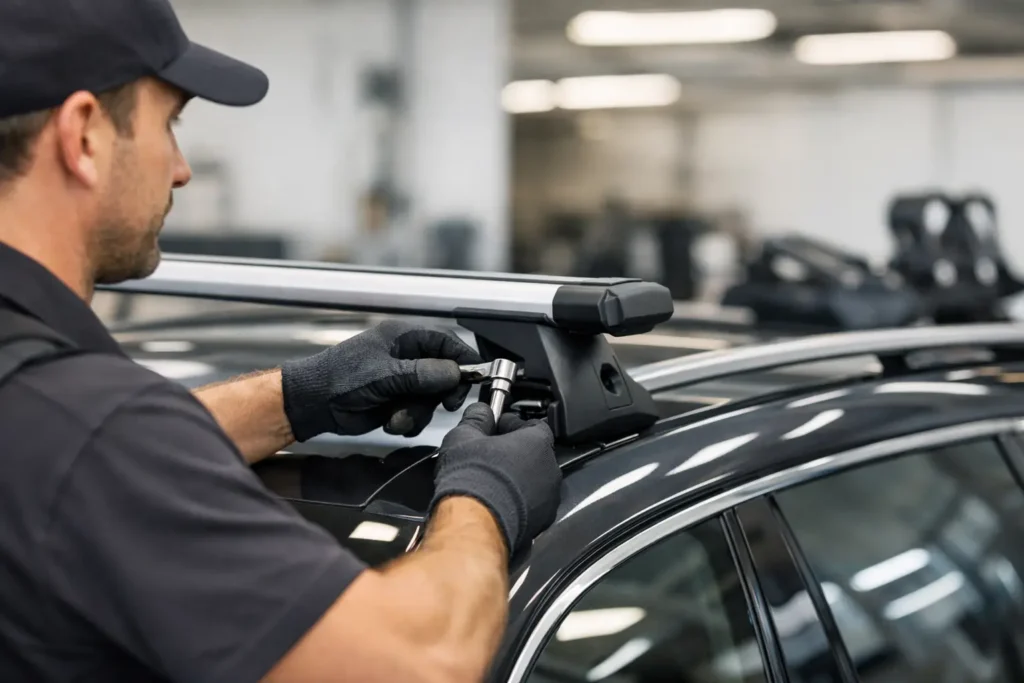
You usually notice roof rack fitting when it goes wrong – wind noise at highway speed, a shaky load, scratched paint, or a trip delayed on the driveway while you try to work out which part goes where. That is exactly why this guide to professional roof rack fitting matters. If you are heading off on vacation, packing for a camping weekend, or trying to free up space inside the car for kids, dogs, or extra luggage, the fitting needs to be right the first time.
For most drivers, the real issue is not whether a roof rack can be fitted. It is whether it can be fitted safely, correctly, and without wasting half a day. Professional fitting removes the guesswork. It also gives first-time users confidence that the bars, feet, and fixings are matched to the vehicle and set up for the journey ahead.
What professional roof rack fitting actually includes
A proper fitting service is more than attaching two bars to a roof. It starts with checking the exact vehicle make, model, year, and roof type. That part matters because two cars that look nearly identical can use different fitting kits, different bar lengths, or different mounting points.
The installer will normally confirm whether the car has raised rails, flush rails, fixed points, or a bare roof. From there, the correct feet and fitting kit are selected, the bars are positioned to the manufacturer specifications, and torque settings are applied so everything is secure without being overtightened.
That last point is easy to overlook. Too loose and the system may shift. Too tight and you risk damaging trim, threads, or seals. Professional fitting is really about precision, not just speed.
Why DIY fitting is not always the cheaper option
A lot of people assume they will save money by fitting a roof rack themselves. Sometimes that is true – if they already know the system, have the right tools, and are comfortable checking load ratings and placement. But for many families getting ready for a trip, DIY can become expensive in less obvious ways.
The first cost is time. Instructions can be awkward, especially if the bar system uses multiple parts and vehicle-specific adapters. The second cost is error. If the bars are fitted in the wrong position or the load is not evenly supported, you may end up with noise, movement, or a setup that does not feel safe.
Then there is the simple reality that not everyone wants to learn roof rack engineering the night before leaving. Professional fitting is often worth it because it turns a fiddly, uncertain job into a booked appointment with a clear result.
A guide to professional roof rack fitting for different roof types
Not every vehicle takes a roof rack in the same way, and that is where many fitting mistakes start. Raised roof rails are generally the most straightforward. The bars clamp around the rails, and the spacing is set according to the approved system.
Flush rails can look simple but often require a very specific foot pack designed for that exact vehicle shape. Fixed mounting points are usually more secure and neat, though they still need the correct kit and bolt settings. Bare roofs tend to be the most technical because the rack relies on shaped clamps and carefully measured placement around the door frame area.
This is one reason professional fitting is so useful for first-time users. The difference between “it fits” and “it fits properly” often comes down to details that are not obvious from the box.
The checks that should happen before anything goes on the roof
Before fitting starts, the installer should confirm the vehicle’s maximum permitted roof load. That figure comes from the vehicle manufacturer, and it includes the weight of the bars and any accessories, not just the luggage or roof box.
A good fitting service will also look at how the vehicle will actually be used. A couple taking light luggage for a weekend away may need a different setup than a family carrying a roof box for a long highway trip. The load, the distance, and the type of driving all affect what makes sense.
There is also a practical conversation to have about height. Once a roof rack or roof box is fitted, the vehicle may no longer clear low garages, barriers, or drive-thru canopies. That sounds obvious until you pull into a parking garage on autopilot.
Safety matters more than brand names
Good products matter, of course. Quality bars and fitting kits from trusted European manufacturers are designed to work as complete systems, and that gives drivers peace of mind. But even the best hardware can be undermined by poor fitting.
That is why professional installation matters more than simply buying a known brand. The correct bar spread, proper clamp placement, and accurate tightening are what make the setup safe in real-world driving. A quality product fitted badly is still a problem. A quality product fitted properly does the job it is supposed to do.
For rental customers, this is one of the biggest advantages. You are not just getting equipment. You are getting equipment that is matched, installed, and checked by someone who does it regularly.
What to expect at a professional fitting appointment
The best fitting appointments are simple. You arrive at the scheduled time, the vehicle is checked, the correct rack system is installed, and you get clear guidance before you leave. There should not be any confusion about what is being fitted, how long it will take, or what the final cost is.
That straightforward process matters when you are preparing for a trip. Families do not need more travel admin. They need one less thing to worry about.
A dependable service will usually explain how to load the roof system properly, how to check it during a trip, and what to listen for once you are on the road. That kind of handover is especially helpful for customers using roof bars or a roof box for the first time.
Common mistakes professional fitting helps you avoid
The biggest mistake is assuming all roof bars are universal. They are not. Even systems marketed as flexible often depend on vehicle-specific feet or fitting kits. Getting that wrong can mean wasted money or an unsafe setup.
Another common issue is ignoring weight distribution. Heavy items should not all sit at one end of the roof box or on one side of the bars. Uneven loading affects handling and can put extra stress on the rack system.
People also forget to recheck the setup after the first short stretch of driving. A professionally fitted system is installed correctly from the start, but it is still sensible to follow the guidance you are given and carry out any recommended checks. Safety is about fitting and use together, not one or the other.
When renting makes more sense than buying
If you only need extra roof storage for vacations, camping trips, ski travel, or occasional long weekends, buying a full rack and box setup can be hard to justify. The upfront cost is one part of it. Then there is storage at home, ongoing maintenance, and the fact that many systems spend most of the year unused.
That is why a rental model works so well for practical households. You get the extra space when you need it, professional fitting is included, and you avoid paying for equipment that lives in the garage eleven months of the year. For many customers, that is the difference between a complicated purchase and an easy booking.
West Midlands Roof Box Hire is built around exactly that kind of convenience – straightforward pricing, professional fitting, and a service that helps drivers travel with less hassle.
Choosing a service you can trust
If you are comparing providers, look for clarity rather than sales talk. You want to know whether fitting is included, whether appointments are scheduled, whether the equipment is vehicle-specific, and whether the business can explain load limits and safe use in plain English.
It also helps to choose a specialist rather than a general rental company with roof racks as an afterthought. Experience shows up in the small things: quicker fitting, better matching of equipment, fewer delays, and more useful advice when customers have questions.
That matters even more if you are traveling with children or heading off on a long drive. You want to leave knowing the roof system has been installed properly and checked by someone who does this every day.
Guide to professional roof rack fitting – the real benefit
The real benefit is peace of mind. Yes, professional fitting saves time. Yes, it helps avoid mistakes. But more than that, it lets you focus on the trip instead of second-guessing the hardware above your head.
That is especially valuable for first-time users. Roof racks and roof boxes are not difficult once you know them, but there is a learning curve, and travel days are not the best time to tackle it. A professional fitting service shortens that curve immediately.
If you need extra carrying space, the best setup is not simply the one that fits your car. It is the one that fits your trip, your load, and your schedule without adding stress. When that part is handled properly, the drive feels easier before you have even left the driveway.
A good trip starts with the car ready to go, and that includes knowing whatever is on the roof is exactly where it should be.