


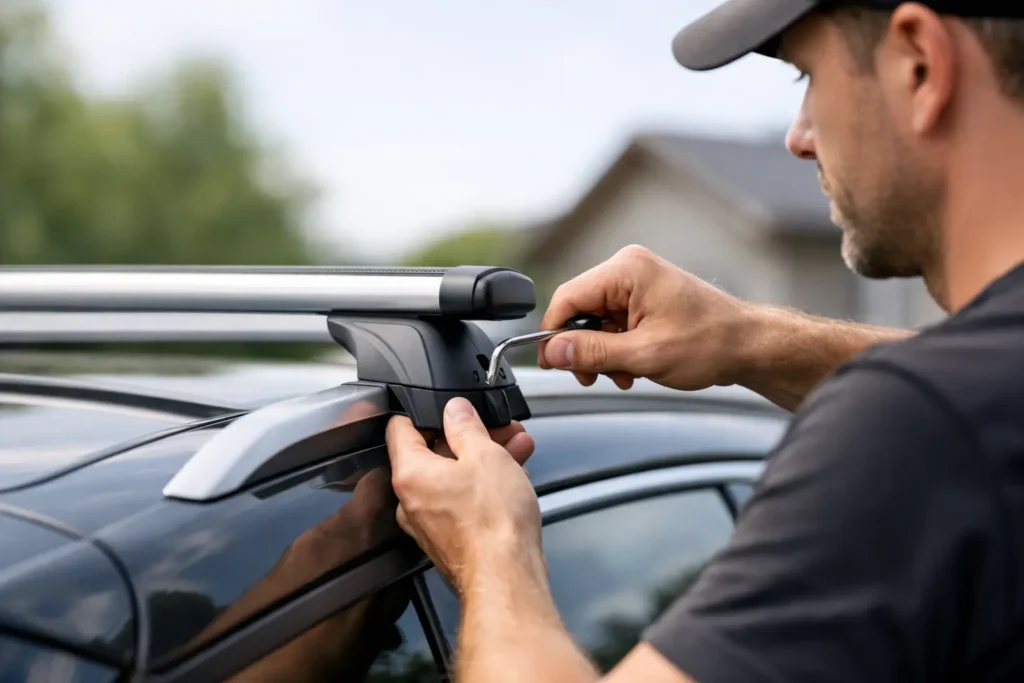
You do not want to find out your roof bars were fitted wrong halfway down the highway with a full car, tired kids, and vacation luggage packed to the roof. That is why understanding how roof bars fitting works matters before you load anything overhead. For most drivers, the process is simpler than they expect, but it does need to be done properly, with the right bars, the right mounting points, and the right checks before you set off.
If you have never used roof bars before, the good news is that fitting them is not guesswork when it is handled professionally. The bars are matched to your exact vehicle, installed to the manufacturer’s specifications, and checked so they sit securely and safely. That takes a lot of stress out of travel prep, especially when you are already juggling packing, route planning, and trying not to leave anything behind.
How roof bars fitting works on different cars
The first thing to know is that roof bars are not one-size-fits-all. Two cars parked next to each other may look similar from the outside, but their roof fixing points can be completely different. Some vehicles have raised roof rails. Others have flush rails, fixed mounting points, or a bare roof that uses a door-frame fitting kit.
That is why the fitting process always starts with the vehicle itself. The make, model, year, and roof type all need to be checked. Even different trim levels of the same car can sometimes use different fittings. This is where many DIY attempts go wrong. The bars may look as if they fit, but if the kit is not made for that exact roof setup, the load will not be supported as it should be.
With professional fitting, the installer identifies the correct bar system and fitting kit before anything is attached. That matters because the feet, clamps, and pads that connect the bars to the roof are the real working parts of the system. The bars across the top get most of the attention, but the safety comes from the way everything is anchored underneath.
What happens during roof bars fitting
Once the correct equipment has been selected, the roof is inspected and cleaned where needed. Dirt trapped under pads or contact points can affect how the system sits, and on some vehicles it can also mark the paint if ignored. A clean contact surface helps the bars sit flush and evenly.
The bars are then assembled with the correct feet and fitting components. On cars with fixed points or rails, the installer positions each foot according to the spacing required by the manufacturer. On bare-roof vehicles, the fit is more exact because the clamps need to sit in the right place around the door frame without being too loose or too tight.
After positioning, the bars are aligned so they run straight across the vehicle and sit at the correct distance apart. This spacing matters more than people realize. If the bars are too close together, the load may not be supported properly. If they are too far apart, the box or other roof accessory may not line up with its mounting hardware.
The fixing points are then tightened to the correct torque. That is a key part of proper installation. Too loose and the system can shift. Too tight and you risk damaging components, the roof mounting points, or the door frame area on some cars. Professional installers use the specifications provided for that exact bar system rather than simply tightening by feel.
Once tightened, the bars are checked again for movement, alignment, and fit. If a roof box is being installed as well, that comes after the bars are secured. The box is mounted onto the bars, centered, adjusted for hatch clearance, and locked in place.
Why correct fit matters more than speed
A lot of customers assume roof bars either fit or they do not. In reality, there is a middle ground where they seem fitted but are not fitted correctly. That is where problems start.
Poorly fitted roof bars can create noise, shift under load, affect how the roof box sits, or put uneven pressure on the car. In some cases, they may also interfere with door seals or create a poor contact point that becomes a problem over a longer trip. You may not notice any of that while parked on the driveway. You are more likely to notice it at 70 mph in crosswinds.
Correct fitting is about more than getting the bars on the car. It is about making sure the whole setup works as intended once it is loaded and driven in real conditions. That includes checking weight limits, making sure accessories are compatible, and confirming the bars are not just attached but properly supported.
Weight limits and safety checks
One of the most important parts of how roof bars fitting works is the load check. Every vehicle has a maximum roof load, and that figure includes the weight of the bars and the roof box, not just your luggage. This catches people out all the time.
For example, if your car has a roof load limit of 165 pounds, and the bars and box together weigh 40 pounds, that leaves 125 pounds for your gear. Exceed that and you are asking the roof system to carry more than the vehicle was designed for. It is not worth the risk.
A proper fitting appointment should include a check of those limits and a practical conversation about what you plan to carry. Heavy items are usually better kept inside the car, lower down, with lighter bulkier items up top. That balance helps with both safety and handling.
The installer should also check that the bars are locked if the system includes locks, and explain any recheck advice after a short drive. Some systems benefit from a quick tension check once the equipment has settled, especially on a first installation.
How long fitting usually takes
For most vehicles, roof bars fitting is fairly quick when the right kit is ready to go. A straightforward installation can often be completed in well under an hour, especially on cars with roof rails or fixed mounting points. Bare-roof vehicles can take a little longer because the positioning and clamp fit need extra care.
If a roof box is being added at the same appointment, allow a bit more time for mounting, positioning, and opening-clearance checks. It is still a small job compared with the time and hassle it saves later.
That is one reason many customers prefer booked fitting rather than trying to figure it out in a parking lot or on the evening before a trip. A scheduled appointment gives you confidence that the equipment is fitted correctly and ready to use when you need it.
DIY fitting versus professional fitting
There is nothing unusual about drivers considering fitting roof bars themselves. If you are experienced, have the correct tools, and are confident reading fitment instructions, it can be done. But there is a difference between possible and hassle-free.
The trade-off usually comes down to time, certainty, and risk. DIY fitting may save a bit of money in some cases, but it often involves checking compatibility, assembling parts, interpreting instructions, and second-guessing whether everything is secure. For first-time users, that can be more stressful than expected.
Professional fitting is usually the better option if you are renting equipment for a vacation, traveling with family, or simply want the setup done right without wasting an afternoon on trial and error. It also helps if your vehicle has less obvious fixing points or if you are combining bars with a roof box for the first time.
That is where a service-led rental business like West Midlands Roof Box Hire makes the process easier. The equipment is matched, fitted, and checked for you, which means less uncertainty and one less job on your travel checklist.
What to expect after fitting
Once the bars are on, driving the car may feel a little different, especially if a roof box is added. You may notice extra wind noise and some effect on fuel economy. That is normal. The exact difference depends on the car, the bar shape, the load, and how far you are traveling.
You will also need to be more aware of height clearance. Multi-story parking garages, height barriers, and low branches become more relevant once anything is mounted on the roof. This sounds obvious, but it is one of the easiest things to forget when you are focused on getting to your destination.
It also helps to drive a little more smoothly. Braking, cornering, and crosswinds can all feel slightly different with a loaded roof. That does not mean roof bars are difficult to use. It just means a sensible setup deserves sensible driving.
The simple version of how roof bars fitting works
At its core, how roof bars fitting works is straightforward. The bars are matched to your exact car, attached using the correct mounting system, tightened to the proper specification, checked for alignment and security, and then used within the vehicle’s stated load limits. When all of that is done properly, roof bars are a safe and practical way to carry extra luggage.
For most families and trip planners, the real value is peace of mind. You get the extra space you need without buying equipment you may only use a few times a year, and you avoid the stress of wondering whether you fitted it correctly yourself. When travel day already comes with enough to think about, having one part handled properly makes a real difference.
A good fitting service should leave you with more than bars on a roof. It should leave you feeling ready to pack, lock up, and get on the road with confidence.