
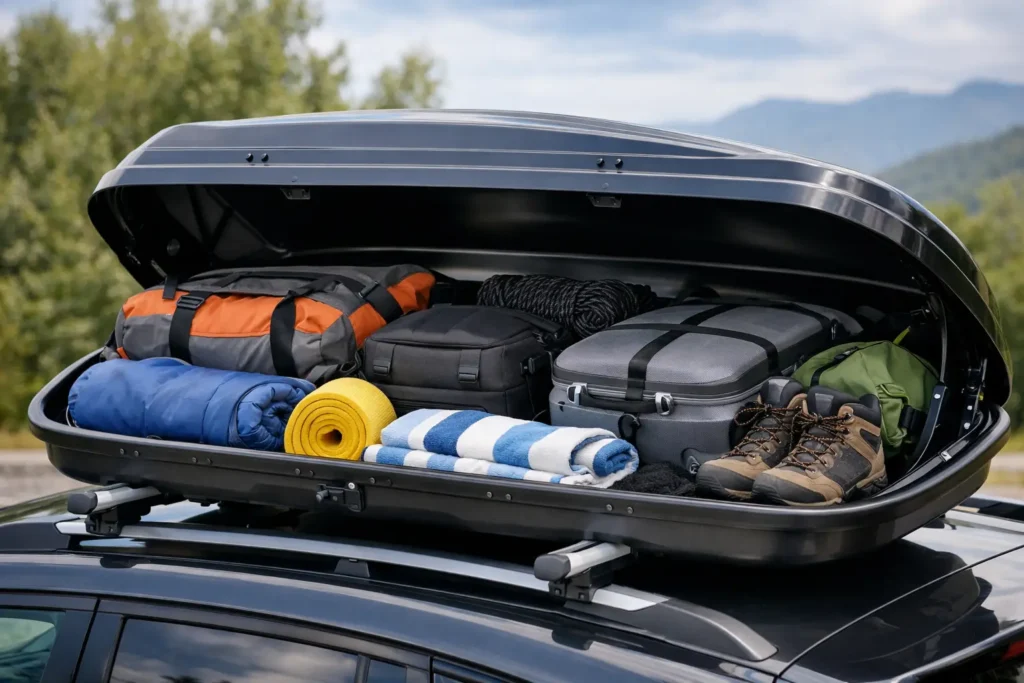
You usually notice packing mistakes when you stop for fuel, open the car, and realize the thing you need most is buried under everything else. That is exactly why knowing how to pack roof box space properly matters. A roof box gives you valuable extra room, but only if you load it in a way that keeps the car stable, protects your gear, and makes the trip easier instead of more frustrating.
For most families, couples, and road trippers, the goal is simple. You want more space inside the car, less stress on travel day, and no last-minute reshuffling in the driveway. The good news is that packing a roof box well is not complicated. It just takes a bit of planning and a clear idea of what should go up top and what should stay in the cabin or trunk.
How to pack roof box space safely
The first rule is to treat the roof box as extra storage, not unlimited storage. Every box and every vehicle has a weight limit, and the total matters more than many people realize. If you overload the box, or put too much weight on the roof overall, you can affect handling, braking, and fuel economy. That is especially noticeable on highways, in crosswinds, or when taking turns on rural roads.
In practical terms, lighter and bulkier items are usually the best fit for a roof box. Think duffel bags, folded clothing, sleeping bags, coats, soft camping gear, and lightweight vacation items that take up space but do not weigh much. Heavier items are generally better kept lower down in the vehicle, where they have less impact on balance.
This is where first-time users often get caught out. A roof box looks tough, so it is easy to assume it can take whatever you throw in it. But hard-shell luggage, tool bags, crates of drinks, and dense equipment can add up quickly. It is not just about whether the box closes. It is about whether the load is sensible once you are moving.
Start with weight and balance
Before you put anything in the box, separate your luggage into rough groups. One pile for light bulky items, one for medium-weight items, and one for heavier gear that should probably stay in the car. That quick step makes the rest of the job much easier.
When you load the roof box, keep the weight spread as evenly as possible from left to right. You do not want one side noticeably heavier than the other. Front to back balance matters too, although that depends a little on the box and vehicle setup. In most cases, placing the heaviest items you do store in the box near the center helps keep the load more stable.
There is always a trade-off here. Perfect balance is ideal, but real trips involve odd-shaped bags, kids’ gear, or soft items that shift around. The aim is not perfection. The aim is to avoid obvious imbalance and to keep the load secure enough that it will not move around while you drive.
Soft bags work better than hard suitcases
If you have a choice, use soft-sided bags instead of rigid suitcases. They are easier to fit into the shape of the box, easier to arrange around other items, and less likely to waste space. Soft bags also put less pressure on the lid, which helps avoid the common problem of a box that seems full even when there is still usable room inside.
Hard suitcases can still work, especially for longer trips, but they tend to create gaps and awkward corners. If you are deciding what to put where, a good approach is to keep structured luggage in the trunk and move the softer, more flexible items into the roof box.
Keep the center clear of pressure points
A common mistake is stacking one heavy item on top of another and then forcing the lid down. That can strain the box, affect how it closes, and damage whatever is inside. Pack so the lid comes down without pressure. If it needs pushing, the load needs reworking.
It also helps to avoid sharp edges pressing upward. Ski boots, camping stove corners, or rigid handles can create pressure points. Padding around these items, or moving them into the car, is usually the smarter choice.
Pack by when you will need things
The best-packed roof box is not always the one that fits the most. It is the one that saves you hassle during the trip.
Put rarely needed items at the bottom or toward the far end of the box. Put things you may want during a stop closer to the opening. For a family trip, that might mean travel strollers, picnic blankets, or spare jackets are easier to reach than the extra towels or backup bedding.
This matters even more on multi-stop trips. If you are staying overnight before reaching your final destination, pack one separate overnight bag in the car instead of burying essentials in the roof box. That way you are not unloading half the roof storage in a hotel parking lot.
This is one of those areas where it depends on the trip. For a beach vacation, easy access to chairs or towels might matter. For camping, setup gear may need to come out first. For a simple airport run, secure packing matters more than quick access. Think about the first thing you will need when you arrive, and pack backward from there.
Use the space without overfilling it
A roof box works best when items are packed snugly but not crammed. Too loose, and things can shift. Too tight, and the lid may not close or lock properly.
Fill gaps with lighter soft items such as coats, towels, or small duffel bags. That helps stop movement without adding much weight. It also protects more delicate items from rubbing during the trip.
What you do not want is empty space around heavier objects. That can lead to sliding, noise, and uneven movement on the road. If you hear items shifting when you corner or brake, that is usually a sign the load was not packed tightly enough.
Straps are there for a reason
If your roof box has internal straps, use them. They help keep the load in place and reduce movement during braking and turns. Many people skip this step on shorter trips, but even a two-hour drive can involve sudden stops or rough roads.
The simple rule is this. If an item could slide, strap it. If the contents are mostly soft bags packed tightly together, movement is less likely, but the straps still add reassurance.
What should not go in a roof box
There are some items that are better kept out of the roof box altogether. Very heavy gear, fragile electronics, valuables, important documents, and anything you may urgently need while driving should stay inside the vehicle.
Food can be a mixed one. Dry snacks are usually fine, but anything sensitive to heat is better kept in the cabin. Roof boxes can get warm, especially in summer. The same goes for medications, toiletries that can leak, or items that should not be exposed to temperature changes.
If you are traveling with pet supplies, think carefully about placement. Lightweight bedding can go in the box, but food, medication, water bowls, and anything you may need quickly should stay accessible in the car.
Check the box before you set off
Once packed, close the lid and make sure it locks properly on both sides if your model requires it. Then give the box a visual check. Nothing should be bulging against the lid, and the load should feel settled rather than forced into place.
It is also worth checking the roof box after the first part of your journey, especially if this is your first time using one. A quick stop after 20 to 30 minutes gives you a chance to make sure everything still feels secure. After that, checking at fuel or rest stops is usually enough.
If you are renting rather than owning, this is one of the big advantages of having the box professionally fitted in the first place. You can start your trip with confidence that the setup is right, then focus on packing it sensibly rather than second-guessing the hardware.
A practical roof box packing routine
If you want a simple approach that works for most trips, do this every time. Put heavy items low in the car. Use the roof box for lighter bulky gear. Pack soft bags first, spread the weight evenly, fill gaps with small light items, and keep the things you may need first within easier reach. Then close the lid without force and double-check the load before leaving.
That routine works whether you are heading off for a weekend break, a family vacation, or a camping trip with too much gear and not enough trunk space. It is not about packing more for the sake of it. It is about making the journey calmer, safer, and much easier to manage.
When the car feels less crowded and you know exactly where everything is, the trip starts better before you have even left the driveway.