


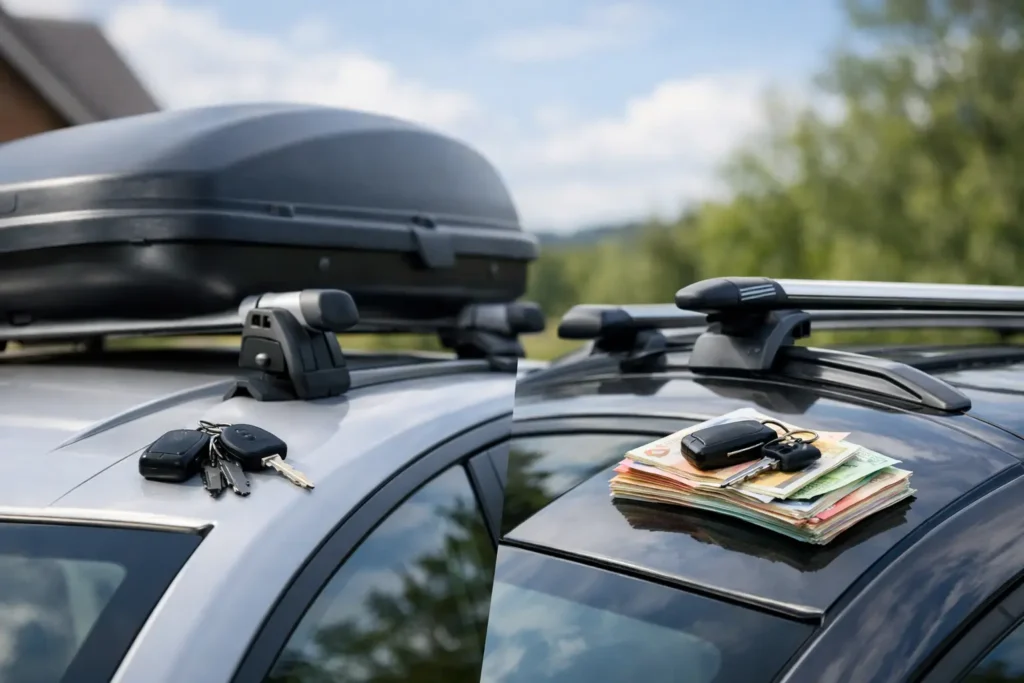
You usually do not think about roof bars until the night before a trip, when the trunk will not close and the back seat is already full of bags, a stroller, or camping gear. That is exactly when the question of roof bars hire vs ownership becomes real. If you only need extra carrying space for a holiday, a weekend away, or a seasonal trip, buying can look sensible at first glance. Once you factor in cost, storage, fitting, and how often you will actually use them, the answer is not always so simple.
Roof bars hire vs ownership: what really matters
For most drivers, this decision comes down to frequency. If you travel with extra luggage once or twice a year, hiring roof bars often makes more financial sense than owning them. If you are using them every month for bikes, luggage, or work equipment, ownership can start to look more reasonable.
The catch is that cost is only one part of it. Roof bars are not just something you buy and forget. They need to fit your specific vehicle, be installed correctly, removed when not needed, and stored somewhere safe and dry. That is where hiring has a clear advantage for many families and occasional travelers.
A lot of people also assume ownership gives them more convenience. In practice, it can create more jobs. You have to choose the right model, fit it properly, keep the parts together, and deal with the fact that it is one more bulky item taking up room at home.
When hiring roof bars makes the most sense
If your travel needs are occasional, hiring is usually the more practical route. Families heading off on a summer vacation, couples taking a long road trip, or pet owners trying to free up cabin space often need roof bars for a short, specific window. Paying for that exact period can be far easier than buying a full setup you may barely use afterward.
Hiring also removes the guesswork for first-time users. A lot of customers are not completely sure which bars fit their car, how tightly they should be mounted, or whether they are safe to load for a longer journey. Professional fitting changes that. Instead of spending time watching videos, reading forums, and hoping you have ordered the right parts, you get a setup that is fitted properly and ready for the trip.
That matters more than people think. Roof bars are safety equipment. Poor fitting can lead to noise, movement, damage to the vehicle, or worse, an insecure load on the road. If you are not confident doing it yourself, hiring with fitting included is a very sensible option.
There is also the issue of storage. Roof bars are smaller than a roof box, but they still need to be kept somewhere dry and secure when not in use. For households that are already tight on garage or shed space, ownership can become a nuisance very quickly.
The cost difference is often bigger than expected
On paper, buying roof bars can seem like the cheaper long-term option. But many people compare purchase price alone and stop there. The full cost of ownership includes more than the bars themselves.
You need the correct system for your exact vehicle. Depending on the car, that may mean specific feet, fixings, adapters, or lock sets. If you get it wrong, you may need to exchange parts or start again. Add in the time spent researching compatible products, the possibility of fitting mistakes, and the fact that some bars may not suit your next car, and ownership becomes less straightforward.
Hiring keeps things simpler. You pay for the period you need, the fitting is handled for you, and when the trip is over, the bars go back. No long-term commitment, no paying upfront for equipment that spends most of the year unused, and no need to worry about replacing worn or missing parts later on.
For occasional holiday use, that is often the tipping point. Saving money is one thing. Avoiding hassle is another, and for many customers that matters just as much.
When ownership might still be the better choice
There are cases where buying roof bars is the right move. If you use them regularly throughout the year, ownership can work well. Someone who carries bikes every weekend, travels frequently for outdoor hobbies, or needs roof transport for work may get enough use to justify the upfront spend.
Ownership may also suit people who are comfortable fitting and removing the bars themselves and have proper storage space at home. If you know your vehicle well, understand load limits, and prefer having the equipment ready whenever you need it, buying can feel more convenient.
Even then, it depends on how long you plan to keep the same vehicle. Roof bars are not always universal in the way people expect. A setup that fits your current car may not transfer neatly to the next one. If you change vehicles every few years, the long-term value of ownership can drop quickly.
Convenience is not just about access
People often frame this as immediate access versus short-term rental. That misses the bigger picture. True convenience is not just having roof bars in your garage. It is being able to solve your travel-space problem without creating three new ones.
With hiring, the process is usually more controlled. You book the dates, attend a fitting appointment, and collect the vehicle ready for the journey. When you return, the bars come off and your car goes back to normal. There is no need to leave them on for weeks, no risk of misplacing fittings, and no pressure to become an expert just to get packed for a family trip.
That is especially helpful for first-time users. A lot of customers simply want extra space without any drama. They do not want to compare technical specs for hours or second-guess whether everything is secure. They want a straightforward service and the confidence that the equipment is fitted properly.
Roof bars hire vs ownership for families and holiday travel
This is where hiring usually comes into its own. Family travel is often seasonal. One big summer trip, perhaps a camping break, maybe Christmas luggage runs or a half-term getaway. Those are real storage problems, but they are not always year-round ones.
Owning roof bars for a couple of busy travel weeks each year can feel unnecessary once the trip is over. The same applies if you are borrowing space in the garage, trying to keep clutter down, or simply do not want to spend hundreds on equipment that sits idle.
Hiring is also easier when your needs change from trip to trip. One year it is extra luggage for a beach vacation. Next time it might be camping gear or a pushchair and travel cot. Temporary extra carrying capacity is exactly that – temporary. Renting equipment to match those moments is often the smarter fit.
For drivers in and around Birmingham, Tamworth, and the wider West Midlands, that kind of convenience can make trip planning much easier. A local specialist service with scheduled fitting saves both time and uncertainty, which is often worth more than people expect when they are already juggling packing, kids, pets, and departure times.
The hidden downside of leaving bars on the car
Some owners leave roof bars fitted all the time to avoid reinstalling them. That can be tempting, but it is not always ideal. Bars left on permanently can add wind noise, affect fuel economy, and leave your car carrying hardware you do not actually need day to day.
There is also wear and tear to think about. Dirt, weather exposure, and general aging can all take a toll over time. That may not be a huge issue for frequent users, but for occasional users it is another sign that ownership is not automatically the easy option.
When you hire, the equipment is there when you need it and gone when you do not. For many customers, that suits real life much better.
So which one should you choose?
If you only need roof bars for a vacation, a road trip, or a handful of journeys each year, hiring is usually the better-value and lower-stress option. You avoid the larger upfront cost, skip the storage problem, and get the reassurance of proper fitting.
If you use roof bars regularly, have the space to store them, and are confident handling setup yourself, ownership may be worth it. But it only becomes the clear winner when your usage is frequent enough to outweigh the extra cost and responsibility.
That is why so many occasional travelers choose hire. It fits the way they actually travel – practical, flexible, and without paying for twelve months of ownership to solve two weeks of need.
If your next trip is coming up and space is already looking tight, the best choice is usually the one that gets you packed, fitted, and on the road without turning travel prep into another job.