
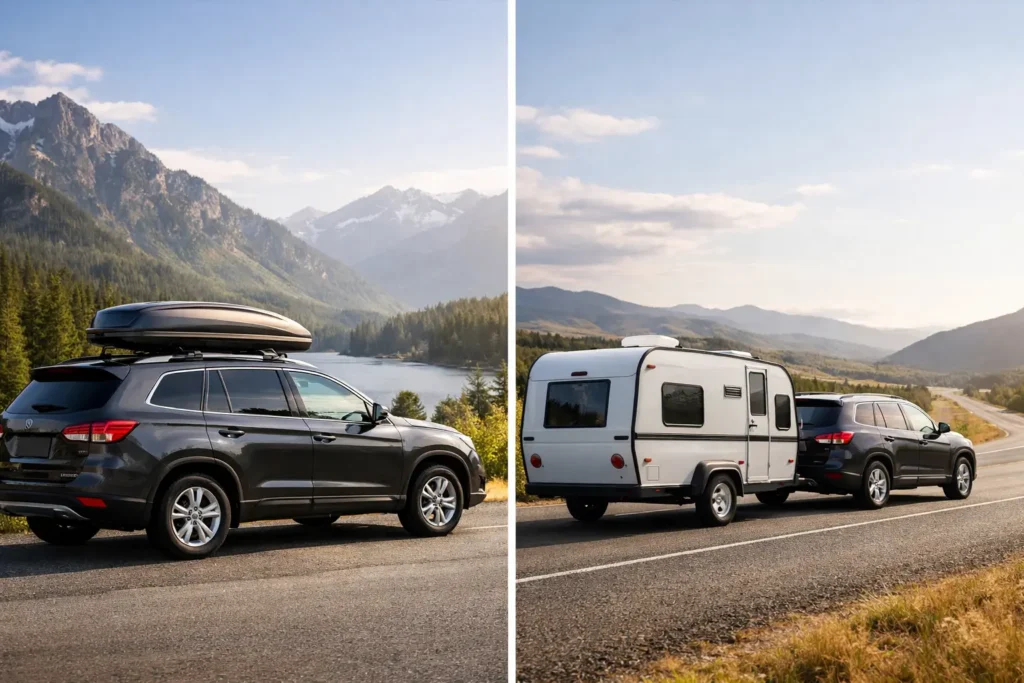
Packing for a trip gets stressful fast when the trunk is already full before the snacks, stroller, dog bed, or camping gear even goes in. If you’re weighing a roof box or trailer for road trip travel, the right choice usually comes down to one simple question – do you want extra space with minimal fuss, or maximum carrying capacity with more compromise?
For most families, couples, and regular vacation drivers, a roof box is the easier answer. That does not mean a trailer is wrong. It means a trailer only starts to make more sense when your load is heavier, bulkier, or more awkward than a typical car-based trip.
Roof box or trailer for road trip planning: start with the kind of trip
A weekend hotel stay, a beach break, and a two-week camping vacation do not place the same demands on your vehicle. That is why this decision is less about which option is better in general and more about which one fits the way you travel.
A roof box works best when your main problem is luggage overflow. Suitcases, soft bags, coats, kid gear, and lighter travel items can move out of the cabin and onto the roof, which gives everyone more space inside the car. That matters more than people expect on a long drive. Less clutter in the back seat means a calmer trip, better visibility, and fewer arguments about whose bag is under whose feet.
A trailer suits trips where the problem is not just overflow but volume or weight. If you are carrying large camping equipment, multiple bikes, bulky outdoor gear, or equipment that simply will not fit in a roof box, a trailer gives you more freedom. The trade-off is that you are no longer just driving your car. You are towing, parking, reversing, and securing an extra unit for the entire trip.
Why a roof box is often the simpler choice
Most drivers want added space without making the journey harder. That is where a roof box usually wins.
Once professionally fitted, a good roof box feels straightforward. You load it, lock it, and drive much as you normally would, with a little extra awareness for height and fuel use. You do not have to think about trailer lighting, tow ball compatibility, trailer tires, storage at the destination, or whether your hotel parking lot has enough room to maneuver.
That simplicity matters even more for first-time users. A lot of people are perfectly comfortable driving with a roof box after a short explanation and proper fitting. Towing a trailer is different. Even confident drivers can find it tiring on highways, awkward at gas stations, and stressful in unfamiliar places.
For family road trips, that ease is often the deciding factor. If your goal is to make the trip less hassle, adding a trailer can solve one problem while creating three more.
When a trailer makes more sense
There are trips where a roof box is simply not enough. If you are moving large hard-sided equipment, carrying heavy loads, or traveling with gear that would be unsafe or impractical on the roof, a trailer may be the better option.
This is especially true for longer camping trips or active vacations where the car is packed with people, coolers, outdoor equipment, and supplies. A trailer also helps if your vehicle has limited roof load capacity or if you do not want to lift items overhead.
Still, it is worth being honest about what you are packing. Many people assume they need a trailer when what they really need is smarter use of space. A roof box can take a surprising amount of the pressure off, particularly when heavier items stay in the vehicle and lighter bulkier items go on top.
Cost is not just the rental price
At first glance, some drivers compare a roof box and a trailer on basic rental cost alone. That rarely tells the full story.
A trailer may seem affordable to hire, but towing can increase fuel use, and the extra hassle can have a cost of its own. You may need separate insurance considerations, secure parking, and a vehicle with proper towing capability. If you are not already set up for towing, that can turn into a much bigger commitment than expected.
A roof box tends to be the more predictable option. It is easier to budget for, easier to fit into a short-term trip plan, and easier to return to normal once the trip is over. For drivers who only need extra storage once or twice a year, renting rather than buying is usually the practical move. You avoid the upfront purchase cost, and you do not have to find year-round storage space at home.
That is one reason services like West Midlands Roof Box Hire appeal to so many travelers. You get the extra capacity when you need it, professional fitting included, and none of the long-term ownership hassle.
Roof box or trailer for road trip driving comfort
Driving comfort is often underestimated until you are several hours into the trip.
A roof box will affect the feel of the car, especially in crosswinds and at speed, but most drivers adjust quickly. The bigger practical change is remembering your new height. Drive-thrus, parking garages, and low barriers suddenly need your attention.
A trailer changes more than height. It changes braking distance, cornering, acceleration, lane changes, and reversing. You have to think farther ahead. If traffic is heavy, roads are narrow, or your destination includes small parking areas, towing can become tiring fast.
For road trips with frequent stops, family attractions, and mixed driving conditions, that difference matters. A roof box is usually easier to live with day after day.
Security and peace of mind
Both options can be secure if used properly, but they create different concerns.
A locked roof box attached to fitted bars is generally straightforward. Your belongings are enclosed, protected from the weather, and kept off seats and floor space inside the car. That can make rest stops and overnight stays feel more organized.
A trailer adds another item to watch. Depending on where you stay, you may need to think about where it is parked, whether it can be locked properly, and how visible or vulnerable it is when left outside. None of that is unmanageable, but it is another layer to consider.
If your trip is built around convenience, simpler usually feels safer.
What type of traveler should choose each one?
If you are a family heading on vacation with suitcases, kids’ gear, and a few extras, a roof box is usually the better fit. The same goes for couples on a long driving holiday, pet owners who want to free up cabin space, and anyone who wants a cleaner, less cramped interior.
If you are carrying oversized camping equipment, multiple large items, or loads that exceed what a roof setup can sensibly handle, a trailer may be worth it. It is more work, but sometimes that extra capacity is the only realistic option.
The key is not to overbuy the solution. If your space problem is moderate, a trailer can be unnecessary complexity. If your load is genuinely large or heavy, a roof box may leave you frustrated.
A practical way to decide
Before you choose, set everything you plan to take in one place. Not the idealized version of your packing list – the real one. Include the cooler, the folded stroller, the extra shoes, the camping chairs, the dog supplies, all of it.
Then separate it into three groups: heavy items that should stay low in the car, light bulky items that could go in a roof box, and oversized equipment that may require a trailer. That quick exercise usually makes the answer much clearer.
It also helps to think about the trip itself, not just the packing. Are you driving mostly highways or small local roads? Will you be parking in cities, hotel lots, or campsites? Are you comfortable towing for long distances? Do you want the easiest setup possible, or do you genuinely need maximum load space?
For a lot of road trip travelers, the roof box wins because it solves the real problem without making the rest of the trip harder. You get more room, better comfort inside the vehicle, and a setup that feels manageable from departure to arrival.
If you are still deciding between a roof box or trailer for road trip travel, choose the option that reduces stress, not just the one that adds space. Extra capacity is useful. A smoother drive, easier stops, and less hassle along the way are what make the trip feel like a vacation in the first place.