


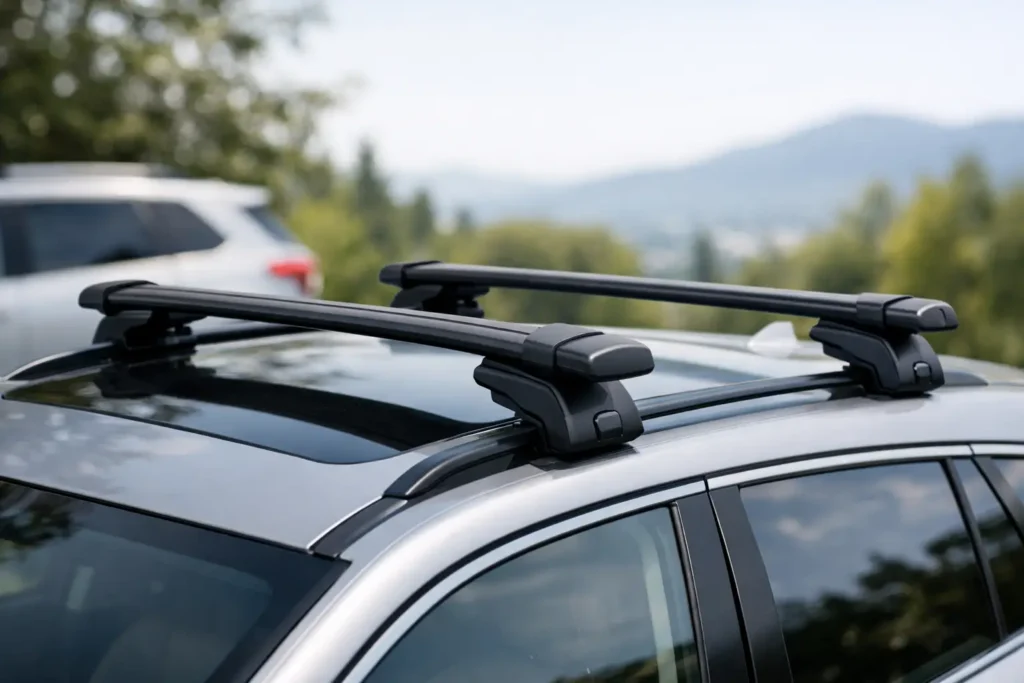
You usually find out roof bars are not one-size-fits-all at the worst possible moment – when the bags are packed, the kids are ready, and you realize your car roof is a bit more complicated than expected. If you are asking can any car use roof bars, the short answer is no. Many cars can use them, but only with the right bar type, the right fitting kit, and the right weight limits.
That matters because roof bars are the foundation for everything else. A roof box, bike rack, or ski carrier is only as safe as the bars underneath it. Get the match wrong, and you are not just dealing with inconvenience. You could end up with damage to the car, a noisy drive, or equipment that simply should not be used.
Can any car use roof bars?
Not every car can take roof bars in the same way, and some cars are much easier to fit than others. The key difference is how the roof was designed by the manufacturer. Some vehicles come with raised roof rails, some have flush rails, some have fixed mounting points, and some have a completely bare roof with no obvious attachment points at all.
That is why two similar-looking cars can need completely different setups. A compact SUV might accept bars in minutes because it already has rails fitted. A hatchback parked next to it may need a vehicle-specific clamp kit. Another model may not be suitable at all for the kind of bars or load you had in mind.
So the real question is not just can any car use roof bars. It is whether your specific make, model, year, and roof style can safely take a compatible set.
What determines whether a car can use roof bars?
The biggest factor is the roof design. Raised rails are often the simplest because the bars attach around the rails already built into the car. Flush rails sit closer to the roof and need a different style of connection. Fixed points are factory mounting spots hidden under trim or small covers. Bare roofs usually need a door-frame clamp system designed specifically for that vehicle.
The model year matters too. Carmakers regularly change roof dimensions, door shapes, and fixing locations between generations. A fitting kit that works on a 2018 model may not fit the 2021 version, even if the vehicle name stayed the same.
Then there is the load rating. Every car has a maximum roof load set by the manufacturer. That figure includes the weight of the bars plus the roof box or rack plus whatever you put inside it. If your car has a low roof load limit, that does not always stop you from using roof bars, but it may limit what you can carry.
Cars that can usually use roof bars
Most everyday vehicles can take roof bars if a compatible system exists for them. Sedans, wagons, hatchbacks, SUVs, and many crossovers are commonly fitted with bars. Family cars are often good candidates because manufacturers know owners may want extra carrying space.
Vans and some larger MPV-style vehicles can also be suitable, although commercial models often need a different setup and may have different load rules. Smaller city cars can sometimes take bars too, but available load capacity may be more limited.
Where people get caught out is assuming that because a car has a roof, it must be ready for a roof bar system. That is not always true. Some panoramic roofs, unusual rooflines, convertible models, and certain electric vehicles need extra care or may have restrictions.
When roof bars are not straightforward
Cars with glass roofs are a common gray area. In some cases, the bars attach to rails or fixed points and the glass section is not a problem. In others, the roof design affects what can be fitted or how much weight can be carried. It depends on the exact vehicle rather than the presence of glass alone.
Convertibles are another example. Many are not suitable for roof bars at all because the structure and roof design are not intended for them. Coupes with sporty sloping roofs may also have fewer options.
Electric cars can be a mixed picture. Some EVs support roof bars perfectly well. Others have lower roof load limits, unique roof shapes, or efficiency concerns. Even where bars are allowed, adding a roof box can reduce range, so practicality and compatibility both need to be checked.
Why the right fitting kit matters
Roof bars are not just about the crossbars themselves. The fitting kit is what makes the system specific to your car. It is the part that matches the contours, connection points, and mounting method of your exact vehicle.
Without the correct kit, the bars may sit badly, clamp unevenly, or place stress where it should not be. Even if they seem secure at first, that is not a risk worth taking. A proper fit is what keeps the load stable and protects the car.
This is also why borrowing a set from a friend rarely works out as smoothly as people hope. The bars may have come off a car that looks similar, but small differences in roof shape and fixings make all the difference. Roof bars are one of those products where close enough is not good enough.
Can you install roof bars yourself?
Sometimes, yes. Many systems are designed for home fitting, especially on vehicles with clear rails or fixed points. But easy in theory does not always mean stress-free in practice. First-time users often struggle with spacing, torque settings, alignment, or understanding which parts go where.
That is where mistakes tend to creep in. Bars can be overtightened, fitted in the wrong position, or assembled with parts reversed. You may not notice a problem until you hear wind noise on the highway or try to mount a roof box and find everything sits off-center.
For occasional users, professional fitting often makes more sense than buying equipment and hoping you have interpreted the instructions correctly. It saves time, removes guesswork, and gives peace of mind before a long trip.
Common mistakes people make when checking if any car can use roof bars
One of the biggest mistakes is checking only the car brand and skipping the exact model year. Another is focusing on whether bars can physically be attached without checking the roof load limit.
People also confuse roof rails with roof bars. Rails run front to back and are usually part of the car. Roof bars run side to side and are added on. If your car has rails, you may still need bars. If your car has neither, you may still be able to fit a bar system, but it will usually need a more specific kit.
Another common issue is planning around the box before checking the bars. In reality, the bars come first. Once those are correctly matched to the car, you can choose a roof box or rack that works with that setup.
If you only need extra space for one trip
For many drivers, the bigger question is not just compatibility. It is whether buying roof bars makes sense at all. If you travel once or twice a year, purchasing bars and a roof box can be a lot of expense for equipment that then needs storing, maintaining, and refitting later.
That is why trip-based rental is often the more practical route. You get the right equipment for your car, fitted properly, and you only pay for the time you actually need it. For families heading off on vacation, campers needing more room, or couples planning a longer road trip, that can be a much easier way to solve the problem.
At West Midlands Roof Box Hire, that is exactly where many customers start. They are not looking to become roof bar experts. They just want safe extra space, clear pricing, and a fitting appointment that keeps the trip simple.
How to find out if your car can use roof bars
The safest answer always comes from checking the exact vehicle details – make, model, year, roof style, and manufacturer roof load rating. Once those are confirmed, you can identify whether a compatible bar system exists and what kind of accessories it can support.
If you are unsure, do not guess based on photos or a similar car in a parking lot. Roof bars are one of those items where details matter. A quick check now is far better than dealing with a poor fit later.
In most cases, there is a solution. It just may not be the same solution your neighbor uses on their car. And if your trip is close, the best move is often the simplest one: get the right advice, get the right fit, and set off knowing your car is carrying the load it was meant to carry.